
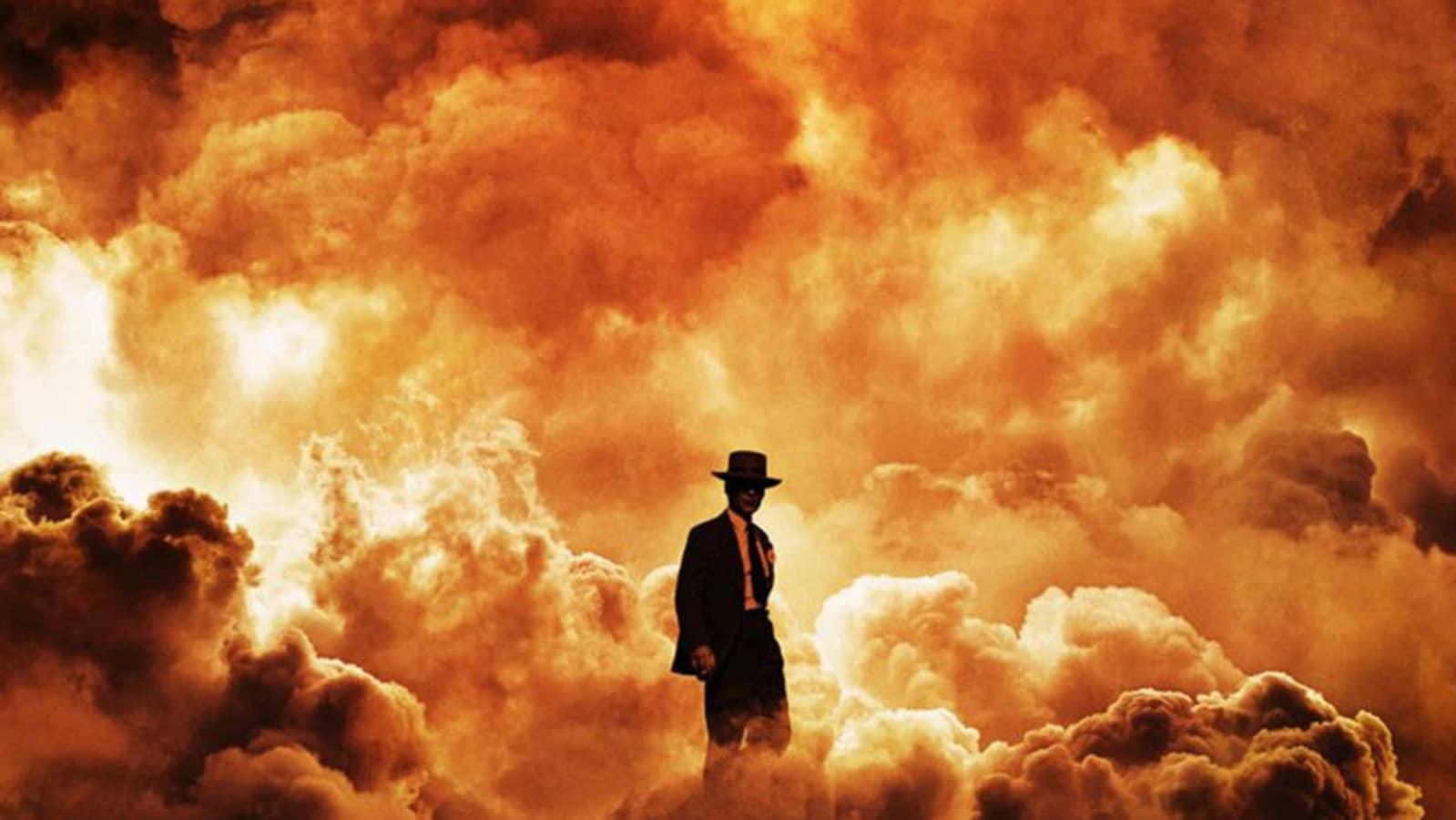
Film and television have long struggled with the idea of nuclear annihilation, from Oshiro Honda’s Godzilla to multiple episodes of Rod Serling’s The Twilight Zone. It stands as a modern undercurrent that we all live with, held over by those still mildly haunted by elementary school bomb drills during the cold war and passed to further generations. We rely on nuclear fission for power and it’s often considered the safest, most effective way of running the nation’s energy. I’ve spent my life with the knowledge that we have the power to destroy ourselves, chuckling as Kubrick skewered it in a very horny film about mutually assured destruction, sitting in fear while the president of the United States legitimately thought nuking a hurricane might be a logical solution, and wondering if North Korean will ever actually get one of these things beyond a crash into the sea.
All this to say that I live in the world created by J. Robert Oppenheimer (Cillian Murphy giving a career-defining performance) and the Manhattan Project. Director Christopher Nolan has long been fascinated with the man, perhaps seeing much of himself in an individual who puts his pursuit of discovery over everything else and demands large amounts of money to do so. Upon storming out of Warner Brothers in 2021 and heading to Universal he was granted a $100m budget to make a film out of his obsession. What he created is bold, frightening, awe-inspiring, and perhaps the most upsetting thing I’ve seen in quite some time.
It is, in short, a masterpiece.

Nolan’s Oppenheimer will not feel like such a triumph at first. There is a lot of chaos, overpowering noise and clamor, building to a drop in volume that is almost reverent. We leap through time, working through the cabinet determination of Lewis Strauss (Robert Downey Jr.), affairs with psychiatrist Jean Tatlock (Florence Pugh), a security hearing/kangaroo court with a snivellingly evil Roger Robb (Jason Clarke), and the creation of the bomb itself at the Los Alamos compound in New Mexico. Whether watching his alcoholic wife Kitty (Emily Blunt) exist in a deep, alcoholic ennui or Kenneth Branagh bring Niels Bohr to a very hammy existence, it’s all layered with an undercurrent of fear. That’s the real triumph of the Inception director’s latest. It’s perhaps the most nakedly honest he’s been onscreen.
That fear is made real by the sheer majesty of the universe and its building blocks. Anyone with a tertiary understanding of quantum mechanics will be able to grasp the implications the film lays down, forever building up as though dropping to the ground and then poisoning the scorched earth with the fallout of good intentions. Oh yes, there is a bomb that goes off, and the moment is horrifying and elating all at once. It produced in me such levels of stress as I had not felt in quite some time and the fear is brought to life but an incredible sound design that puts Oppenheimer at the forefront of the Oscar conversation. The feel of it, the silence and loudness and violence of it, beg to be experienced in the biggest and loudest theatre you can find (I recommend a Dolby Digital, and IMAX, or a theatre offering a 70mm screening with great speakers). The bomb is the point, but the fallout is the real threat.
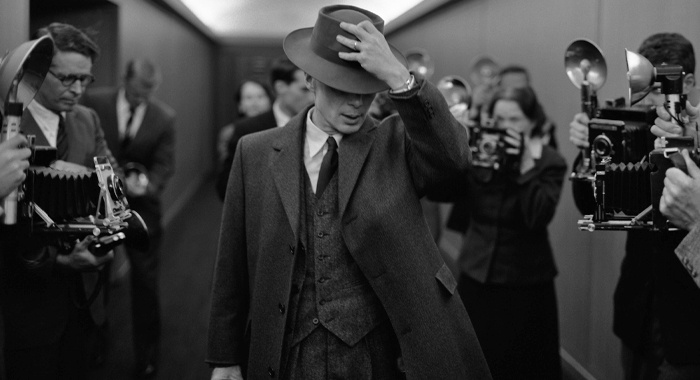
Christopher Nolan has once again teamed with cinematographer Hoyte Van Hoytema, who shot Jordan Peele’s Nope, James Gray’s Ad Astra, and Nolan’s last three films. His work has made him one of the premier visual artists working today and his handling of Oppenheimer lands him several calling card shots. Each image is perfectly woven into an increasingly complicated narrative by editor Jennifer Lame (Tenet, Marriage Story, Manchester by the Sea). Together they build the visual language of Nolan’s obsession into a figure and an experience that begs to be felt as well as seen.
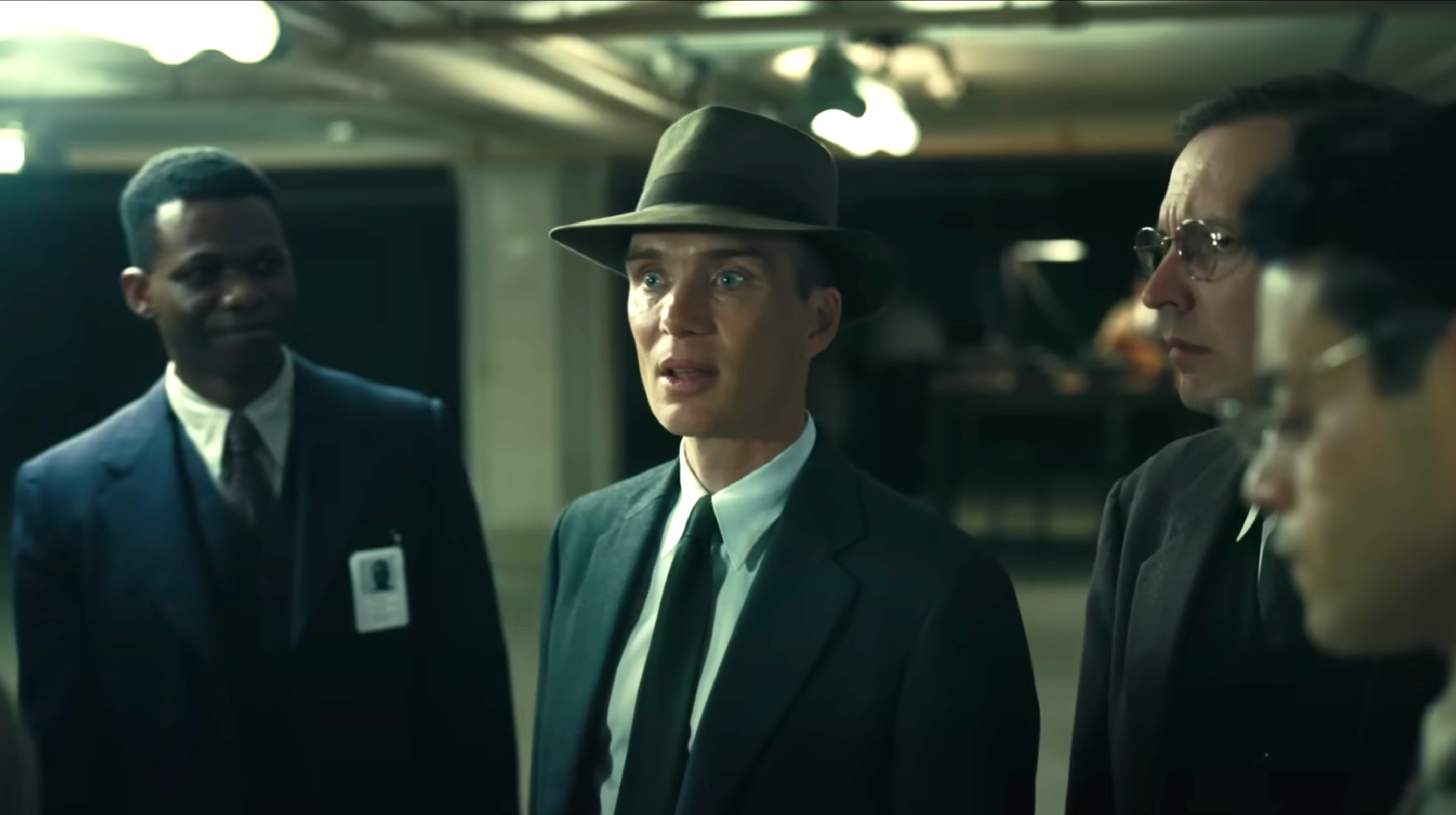
This is a Nolan film and as such it’s a lot of dude’s talking. What’s fascinating is that he’s never been able to wring so much tension out of three hours of JUST dudes talking. That’s 95 percent of what happens, with the rest being erotic interactions and nuclear terror. Intercutting black and white imagery with colorized moments until he crystalizes them in a defining climax, Nolan keeps these conversations clipped in a way that will keep audiences at the edge of their seats as three hours feels like forty-five minutes. It’s staggering that this can be so gripping but it’s crystallized by the explosion and what it unleashed for the world.
Composer Ludwig Göransson has returned to follow up his work on Tenet with a very different work. There are many shades of that previous score in 2023’s Oppenheimer but the tension never turns into action, instead moving to feel closer to a ghost story crossed with Lovecraftian terror. It’s a masterwork of a score, each piece building until the moment that silence is required. That absence of music is crucial to certain moments and it makes the notes that do come through all that much more wonderful.
Was I always going to like this? Potentially, but having my faith rewarded is always a wonderful thing. Getting it multiple times in one weekend? That’s the magic of cinema. And that’s the magic of Oppenheimer, a film that was designed to be as impactful as can be when seen the way the director intended. It’s one of the best the director has offered in a career of incredible movies and I don’t wonder if it might be remembered as his most personal effort.
Oppenheimer is currently in theatres, where it should be seen.

 WRITE DRUNK; EDIT DRUNK
1 Comment