

This film was screened at the 21st annual Tallgrass Film Festival.
Legal drama has surrounded this scathing satire since its premiere at TIFF in 2022 and has continued to plague it ever since. The feature debut of Vera Drew sticks bamboo under the fingernails of corporate comedy as propaganda by attacking everything from comedy brigade troupe/school UCB (this is a guess, don’t quote me on it) to Lorne Michaels and his grip on comedy via Saturday Night Live. After its premiere, the director pulled future screenings after receiving an “angry letter” from a “media conglomerate that will remain nameless.” It has sat in distribution limbo but after several legal back-and-forths the film is taking a small festival run. I was lucky enough to be able to see it at the Tallgrass Film Festival.
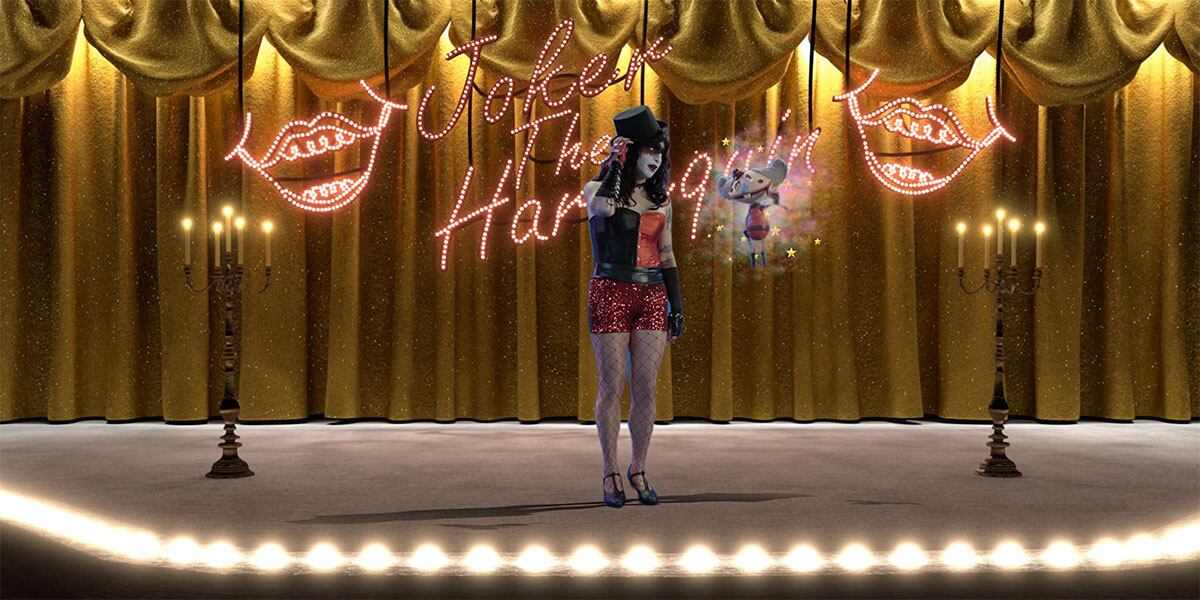
Opening with a title card citing Section 107 of the US Copywrite Act of 1976 (allowing for ‘fair use’ for relevant criticism, social commentary, or education), this bonkers mixed-media project wastes no time lifting straight into the stratosphere. There’s nothing subtle about a Batman parody but I’ve never seen one come under such fire before (hell, they let porn parody Batman XXX slide with no attention). Vera Drew takes no prisoners as she invites multiple of the caped crusader’s rogues gallery onstage, all of them with their own identities and auras that feel of a part with their IP and yet so unique you’d question exactly what wouldn’t be a parody. Her own onscreen transformation and journey, narrated by herself, is perhaps one of the most raw queer coming-of-age tales I’ve ever seen.

We open in Gotham, sure, but immediately flash back to Smallville, Kansas. A young boy (Griffin Kramer) doesn’t feel right in his own skin and this frightens his mother (Lynn Downey). His father, completely absent from the film, seems to want nothing to do with him. The kid, like many a queer person around my age, was activated by Joel Schumacher’s Batman Forever which led to them grappling with their identity. Taken to Arkham Asylum, the family is given Smilex by Dr. Crane (Christian Calloway) and sent home. As an adult, the young boy, still not 100% out about who they are, moves to Gotham to join Lorne Michael’s comedy club. Their brain is scanned, their dick measured, and they are deemed pathetic and needy enough to be a corporate comedian for the low-low price of $15,000.
Sounds like bullshit, right? Vera Drew paints the world of comedy as a dystopian hellscape that has been spit-shined into nothingness by corporate greed and advertising. Her Joker meets Penguin (Nathan Faustyn, a friend of Vera’s) and they found an anti-comedy club, skirting the laws of Gotham where comedy is illegal and the city is monitored by Bat-drones that will shoot onsight.
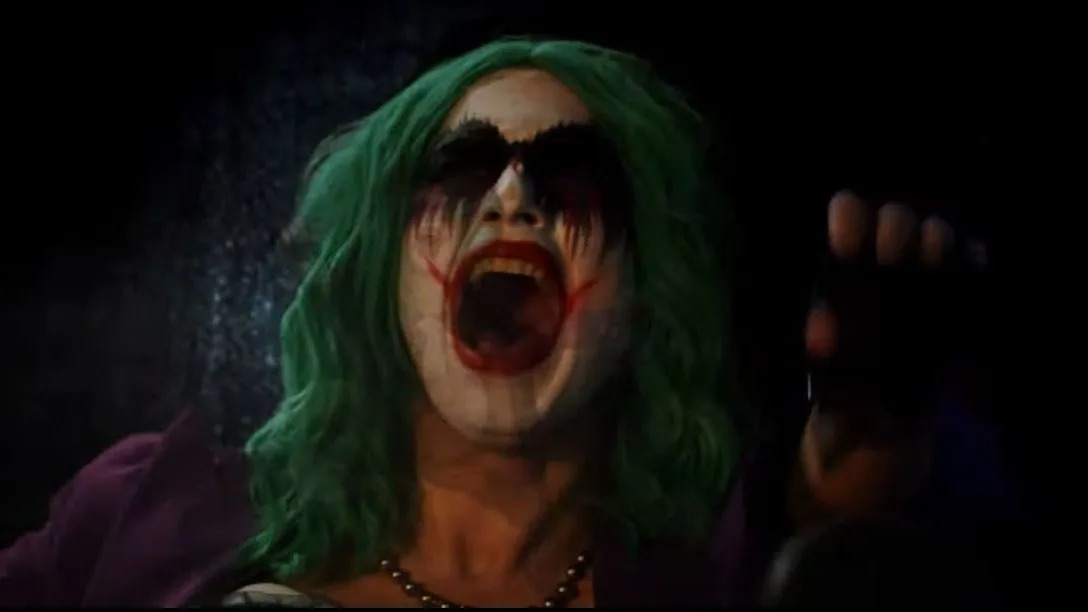
It’s here that the film really takes off. The first bit is an absolute blast to look at, mixing paintings and 3D imagery with traditional animation and performances that are too open to be anything but real. Vera Drew claims the film was shot in five days and I believe it. This is not a bug but a feature, with friends interacting as such and really feeling comfortable in their own skins (and makeup) as they journey through this hellscape.
Several layers of naked trauma sit on the film’s surface and it would be one of the major things to piss off Batman fans. Seeing their hero portrayed as a self-absorbed groomer would ruffle some feathers (bat fur?) but it’s honestly not much of a stretch when you consider he’s a lonely, traumatized billionaire who keeps bringing children into his isolated mansion one at a time. That trauma is displayed in one of the many versions of the Joker that grace the screen. Mister J. (Kane Distler) serves as Joker’s first romance, a t-man who sees and adores the t-girl within and they fall in love. Narcissism can ruin a lot of life’s events and it does here but rather than yet another villain he’s portrayed as a traumatized person who has quite a bit to work on. Joker’s deadname is bleeped throughout the entire film until, in a shocking moment that brought me to tears, it’s viciously thrown at them in a pivotal moment. Vera Drew has stated this is quite an autobiographical film and that’s the key element that keeps The People’s Joker from ever becoming too silly to take seriously.

The film’s extremely lean budget forced a creative structure on the film, with over 100 different artists contributing to different portions of this production and allowing the film to cleverly reference so many different versions of the Batman IP while still remaining afloat in that ocean of Warner Bros. mandated “content.” References to Schumacher (to whom the film is dedicated), Todd Phillips’s Joker, Birds of Prey or the Fantabulous Emancipation of On Harley Quinn, and even Batman: The Animated Series are all over and provide unique flavors to different moments. Vera Drew seems to eschew much, if any mention of Heath Ledger’s portrayal of the character (I couldn’t spot any but there are so many references that I could have just missed it) but other than that no version is safe. Each bit brings out a fun, dynamic new layer of film that is eye-popping.

The People’s Joker is currently seeking wide release. While on a festival run, I’m hoping it can catch the attention of someone who could bring it to a wider audience. It’s an aggressively honest portrayal of a trans woman discovering herself and a queer community that is complicated and messy and human. Trans viewers have a chance to be seen and CIS audiences have a chance to learn. Vera Drew has created something special and I hope the rest of the world gets a chance at it.

 WRITE DRUNK; EDIT DRUNK