

I’ve long adored Garland’s work, from his screenplays to his directorial efforts and novels. The man has a particular cynicism that applies to almost every single work he’s released. It’s a fun dive into the views of someone that has always convoluted everything he’s done by often being unsure what exactly he’s saying. Screenplays are different, often guided by the vision of a director that works closely with his writer, and Garland’s collaborations with Danny Boyle can often feel more focused and specific than his solo efforts. With his new film, Civil War leading the box office despite (or perhaps because of) a myriad of controversies based on nothing but advertising.
I have not ranked a director in a couple of years at this point but I felt that this new Garland release, coupled with his announcement that he would be stepping back from directing, warranted a deep dive into his filmography to understand more about what makes him tick and his journey. I think every single film on this list is worth discussing and has merit, even if some baffle audiences.
I will also be including his four non-directing screenplays. It’s my list.

09. Men
Garland himself seemed to be unsure of what exactly he wanted to say with Men, a deeply chaotic and folklore-inspire tale besotted with the the idea that men suck. A fair point, and history (not to mention our current political climate) definitely justifies that stance, but the way Garland constructs his ode to a woman’s escape into privacy cannot seem to quite nail down what it wants to say. Jessie Buckley gives a staggering performance as Harper Marlowe, a woman just trying to find some peace in the English countryside as she recovers from the suicide (?) of her husband, played by Paapa Esiedu. While it at first seems ridiculous that every man in the village is played by Rory Kinnear being buried under makeup or horrifically mapped onto children, it comes together for a final half hour that serves to truly demand an answer of its audience that the film itself may not truly have. It was an experience I’ll never forget and a movie I’m still wrestling with.
You can read my full review here.

08. Dredd
The 2012 film Dredd is a triumph of comic book adaptation. Gnarly, cruel, and unrelentingly fun, the it manages to be lavish in its portrayal of drug addicts and manufacturers being assaulted by a faceless lawman bent on accomplishing his mission no matter what. Few people have every accomplished with lips and a jawline what Karl Urban does here, all supported by that frightening mask that serves to dehumanize its protagonist as he does its villains. Garland signed on to write the project and the rumor is that it is also his directorial debut, wresting control from Pete Travis when the writer no longer felt confident in his ability to handle it all. What we were delivered is a portrait of an America that has crumbled into an unwilling police state, held together by those that kill before asking questions and may just accidentally do some good along the way. It’s grim and sadly ties in quite closely with some of the themes running through Civil War. What can I say, the guy is worried about the future of the Western world?
07. Civil War
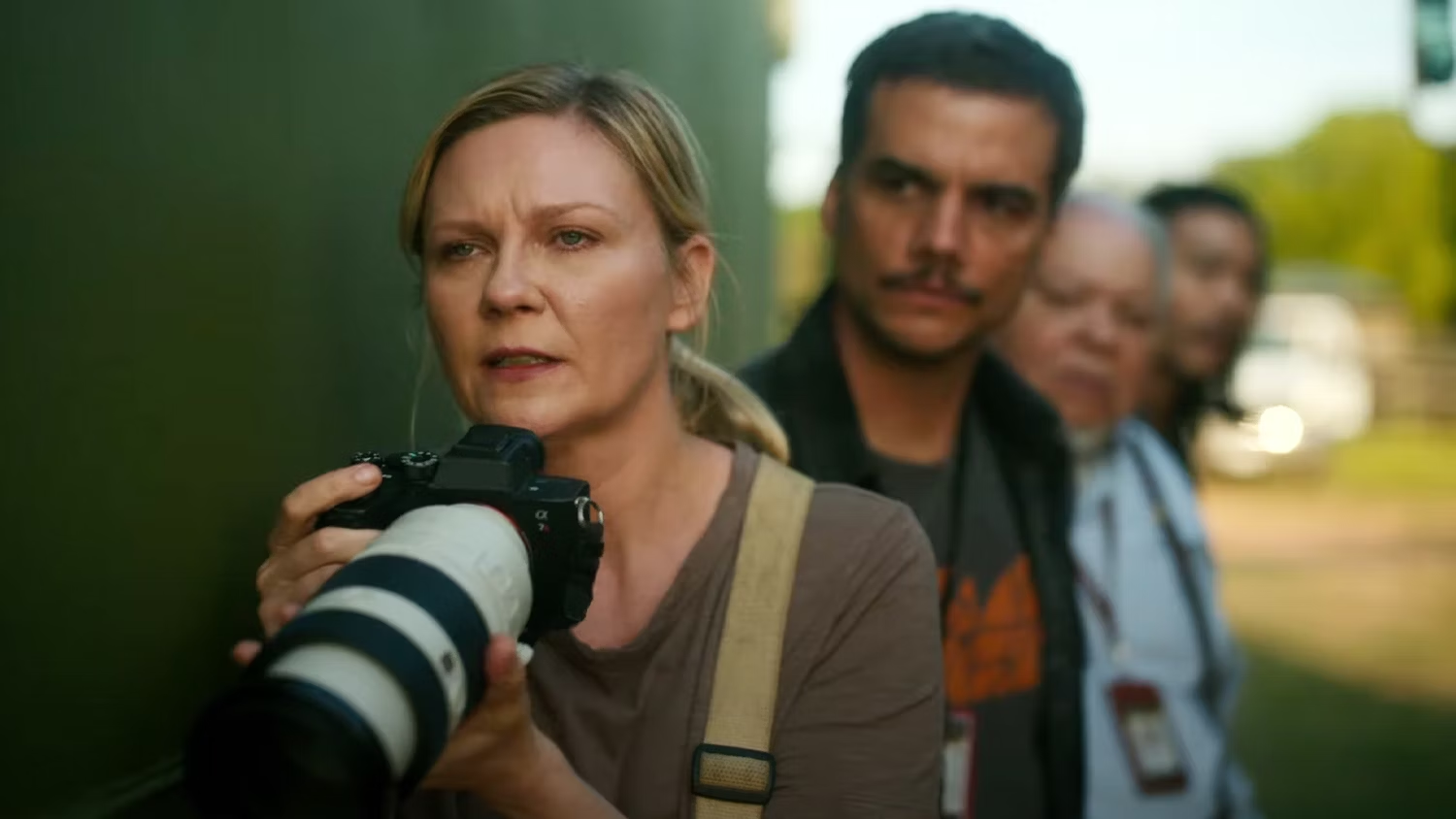
I adore Garland’s latest effort. It’s a brutalistic work that forces audiences to question the wartorn landscape by looking at what they brought into the experience with them. Journalists complain about their midwestern families that sit on farms and pretend like the war doesn’t exist while following it like vultures and pretending they aren’t a part of it. Few things are as unsettling as Jesse Plemons cruel, racist, conspiracy theorist soldier or the imagery of a helicopter crashed in a JC Penny’s parking lot. Dunst is giving an incredible performance but the entire cast holds its own. I think some of Garland’s early statements in the leadup to release have been fascinating, mostly because modern “film journalism” takes one sentence, uses it as a headline, and no one reads the interview and just loses their shit anyway. Civil War serves as both a mirror and a criticism of this kind of storytelling, asking a lot of the audience and offering very little in return unless you are willing to engage with it. It’s a depressing representation of how much media literacy we’ve let go. I love it so much.
You can read my full review here.
06. Ex Machina
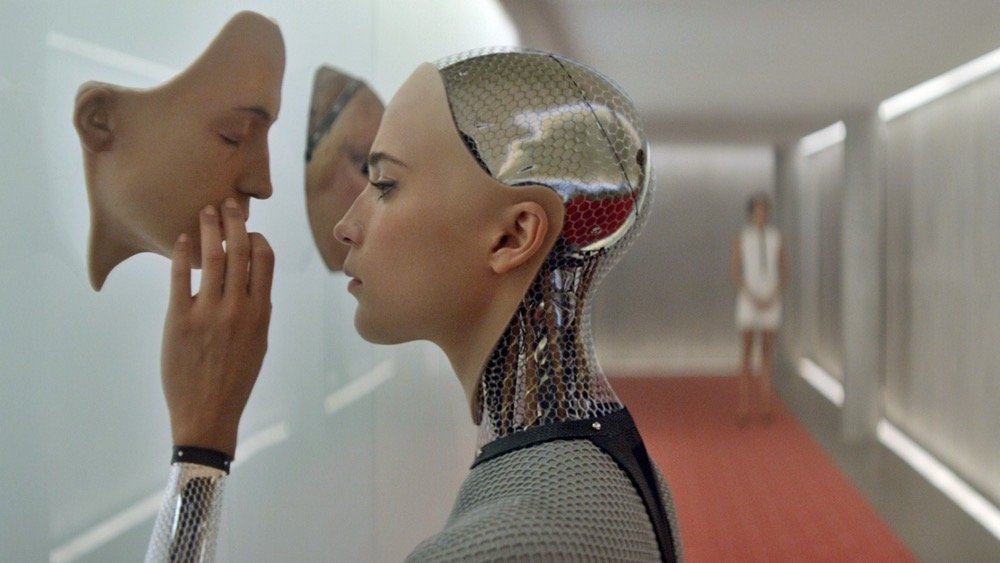
Quite the debut from Garland, whose debut film won an Academy Award for best visual effects and has yet to be beaten in terms of portraying robotics onscreen. Ex Machina, starring a ridiculously hot cast made up of Oscar Isaac, Domhnall Gleeson, Alicia Vikander, and Sonoya Mizuno, offers everything from memeable dance scenes to the chilling revelation that someone could create an entity to manipulate you based on your porn search history. The divide between what is human and what is creation, evidenced by the behavior of Isaac’s Nathan Batemen and the chilling conclusion of the film, is revisited in almost every film throughout Alex Garland’s impressive film career. This early debut also earned him a screenplay nom and deservedly so. It’s a tight, focused film that evidences everything he can conjure. It’s also an example of a music-making phenomenon, which involves having a lifetime to write one’s debut album and two years to write the follow-up. Garland had most of his adult life working on stories with similar themes and dreaming up this debut. The fact that his consecutive films have only built on this despite becoming less audience-friendly is awesome to see.

05. Never Let Me Go
Garland’s script for the Mark Romanek’s adaptation is a beautiful contemplation on what makes a person human (seeing a pattern here?). Kazuo Ishiguro’s is one of the loveliest of the 2010s and was well-handled in the hands of this writer/director pair. It takes a steady hand to adapt a novel and make it feel special, realized onscreen in a way that busts forth from its limitations as well as condenses due to the medium’s own. It helps that they are graced with the talents of Andrew Garfield, Carrie Mulligan, and Keira Knightley in the lead roles while surrounding them with Andrea Riseborough, Charlotte Rampling, Sally Hawkins, and Domhnall Gleeson. This brilliant cast comes together to tell a tale of clones that question their existence even as their end approaches. The climactic moment is one of the most starkly moving things I’ve seen on-film in some time (to be fair I was dealing with a harsh breakup). Just a wonderful film that questions what time, purpose, and love really mean to us.
You can read more on how much I love the film here.

04. Devs
The move to television was a bit baffling to me but the eight episode masterpiece, distributed by FX, made for powerful storytelling and unlocked a seemingly hidden power – dramatic Nick Offerman. This would be the first collaboration between these two, along with Cailee Spaeny and Stephen McKinley Henderson. Utilizing a tech billionaire with a goal and trauma to back it up, Garland holds his cards until close to the end before revealing the scope of his vision. The gold-plated Devs office at multi-billion-dollar tech giant Amaya may look odd, but wait until you see them potentially break through time to watch the crucifixion of Christ. Seem heady? It only gets wilder from there, building to a conclusion that isn’t so surprising as it is inevitable while the audience screams at the characters to turn back. Or move forward, depends on your point of view. Everything about Devs revolves around possibility and point of view and that’s its magic.

03. Annihilation
Sure, it seems like he simply went for an all-female remake of Tarkovsky’s Stalker here, right? You could make that argument about both the film and Jeff VanderMeer’s novel and still miss the point of this thoughtful but very different adaptation. Contemplating grief and and depression are popular topics in film these days (lookin’ at you, “elevated horror”) but often stop short of the important underlying human trait of self-destruction. We are built to implode, and Garland knows it enough to scatter it across multiple films. Annihilation may tell the tale of a woman searching for an extraterrestrial meteor to understand it and save the world but is much more interested in the crumbling relationship she has with her estranged husband. A multitude of actors, from Tessa Thompson to Benedict Wong to Jennifer Jason Leigh, join Natalie Portman in Garland’s best directorial effort to-date.
02. 28 Days Later
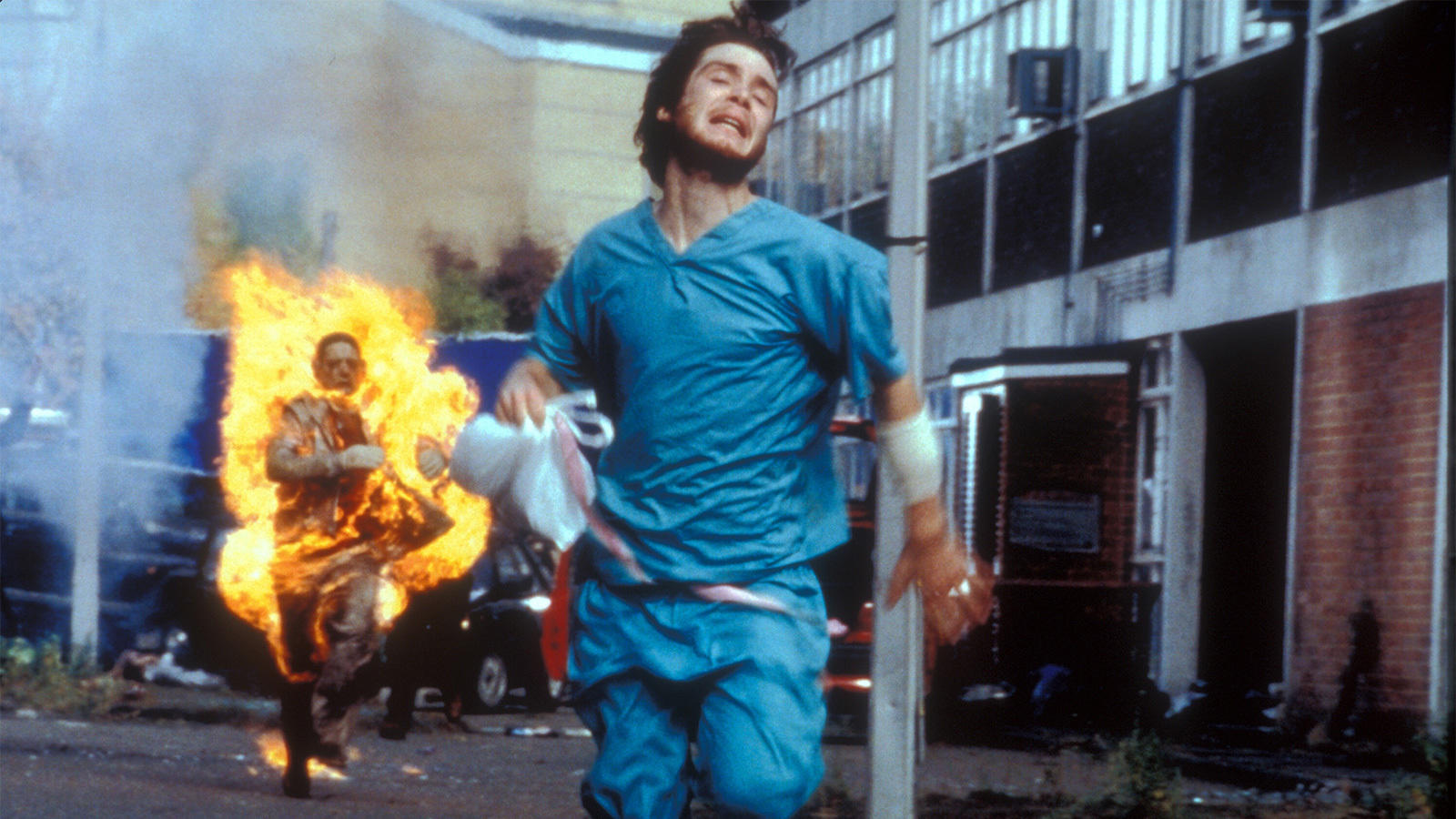
After Danny Boyle adapted Alex Garland’s novel, The Beach, he thought to just have the author write the next movie. What followed was a groundbreaking entry into the zombie apocalypse genre that kicked it up into the forefront of popular culture for almost a decade. The digital photography hasn’t aged well but Garland’s script feels better than ever. It’s a mirthless, angry screenplay that is directly targeting the inherent rage boiling under the surface of societies just waiting to be unleashed. The film could predict any angry protest movement but it’s center is a foursome on a journey to potential aid. Violent infected, horny military men making omelettes with outdated eggs, and a triumphant but weird performance from Brendan Gleeson help this script sing. Very few entries in the zombie zeitgeist stood the test of time and none have become stone cold classics like 28 Days Later.

01. Sunshine
Anyone who knows me will understand why this film sits at the top. Sunshine is one of the most incredible science fiction films of the last thirty years, one that went mostly ignored on release and has developed a cult following (and also a legendarily glitched blu-ray). Garland understands Boyle’s need to occasionally step out the reality of the story in order to serve the audience with a jolt that puts a final note on his symphonies. Don’t mistake it, Sunshine is a symphony, a story in movements that contains sonatas and beautiful swells of almost orchestral imagery but it all stems from Garland’s incredible screenplay. I actually own a shooting script from the film and it’s one of my favorite little treasures. Just like that document, the film is a treasure and one awaiting discovery by so many. It’s a dream of mine to screen this in a large theatre one day, inviting friends and family to see one of the most beautiful displays of the power of film in recent memory.

That’s my list! I think Garland’s diversity as a writer, a director, and an author have given him a range of experience unique amongst auteurs. He’s a character to be puzzled over, studied, and loved. He’s a genuinely wonderful voice in an industry that prefers talent to be applied to something unoriginal. We need to be proud of director’s like Garland in that landscape.

 WRITE DRUNK; EDIT DRUNK