

It’s 2015. I am watching trailers for a film titled Mad Max: Fury Road. I do not think much of George Miller at the time, coming off the back of three family films in a row that did not land. I am worried that this whole thing will be just one long, silly car chase. Miller confirms this fear, proudly stating that is exactly what his film is. Seated in the theatre, I am a grumpus; arms crossed with no faith in what I am about to see. I am served a masterpiece.
And that’s all Miller seems to make now. His last effort in the Mad Max saga was something new, with loads on its mind and a ton to say while following boys spraying their teeth with chrome paint and screaming, “Witness me!” It was a massive achievement, one with a behind-the-scenes story so insane that a book was written about the harrowing tale of the film’s production. Those going into Furiosa might expect more of the same (and who wouldn’t, with all marketing material suggesting so) and they will either be rewarded or devastated. Furiosa is an incredible story, one that spans decades and lifetimes. The title itself, noting that the film is a “Mad Max Saga,” takes away from how powerfully the main character shines. Miller’s Furiosa is a force to be reckoned with; her tale one that must be seen to be believed. Turns out he still had it in him to make it epic.
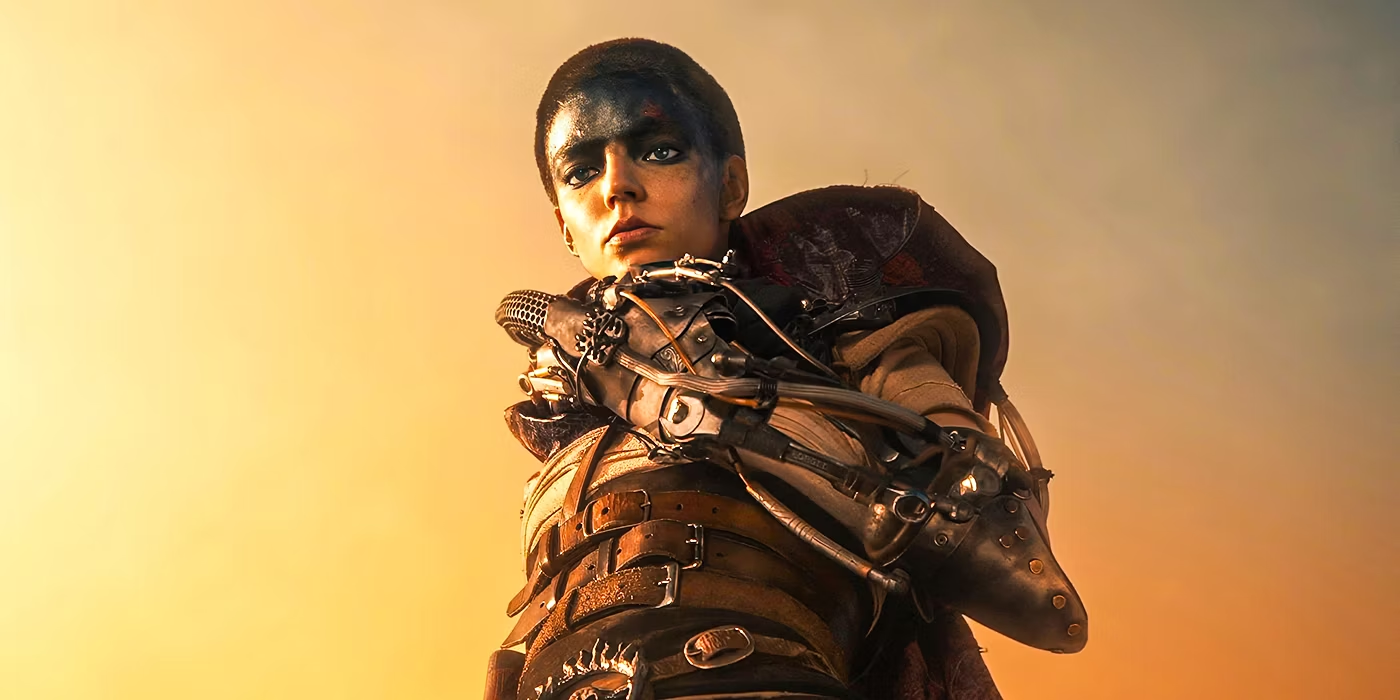
While it may come as a surprise that the filmmaker has delivered such a wildly different film it shouldn’t. George Miller has built much of his reputation on the insanity of his swerves, from his children’s film sequels to the varying tones and stories in each Mad Max film. Furiosa is no different, reaching a scope of the biblical epics of the 50’s while also serving as a Greek-inspired tragedy. And it should not work, to be clear. The victory is grounded by the performances of the lead actors and the absolute dedication to the insane movie trapped in the director’s head, yearning for freedom. Furiosa (Alyla Brown as a child, Anya Taylor-Joy as an adult) is a fiery warrior, forged in tragedy, who also longs for her freedom.
Our narrator sets the stage, wondering, “As the world falls around us, how must we brave its cruelties?” A fine opener, one that would fit multiple other post-apocalyptic stories, but here it’s directly tied to the tale of vengeance that will unfold before us. If Mad Max: Fury Road is about the healing power of hope then Furiosa is the justification for holding on to hope in the first place. Families are taken, resources won and lost, and there’s an entire section of the film that is actually a brilliant description of what it’s like to exist in the world of Capitalism (brilliantly woven into multiple action sequences). This is not a film that asks you to turn your brain off. Instead, one needs to focus completely even as their soul is trying to leave their body due to the insane stuntwork being displayed before them.
Also the amount of nipple damage in this movie is wild. That’s going to do a number on some of you.

It’s always been interesting to see George Miller’s blatant politics on display but Furiosa takes it to a whole new level. His villains, always wonderfully named, are essentially just existing in a wasteland that requires resources to be shared. Immortan Joe runs the show (Lachy Hulme taking over from the late Hugh Keays-Byrne), but he’s set himself up with some excellent middle-management. You’ve got The People Eater (John Howard), who we never see engage in cannibalism but the name has to be there for a reason. He serves as Joe’s right-hand man. You’ve got The Bullet Farmer (a returning Lee Perry), an eloquent man clad in bullets who runs a settlement that…farms bullets. There’s even the good old Guardian of Gastown (Peter Stephens), responsible for keeping all the vehicles fueled. The group’s alliance is stable, all providing exactly what they say they will and keeping their armies satisfied and the people just reliant on them enough to avoid rebellion. That resembles so many workplace cultures that it should be more upsetting than it is.

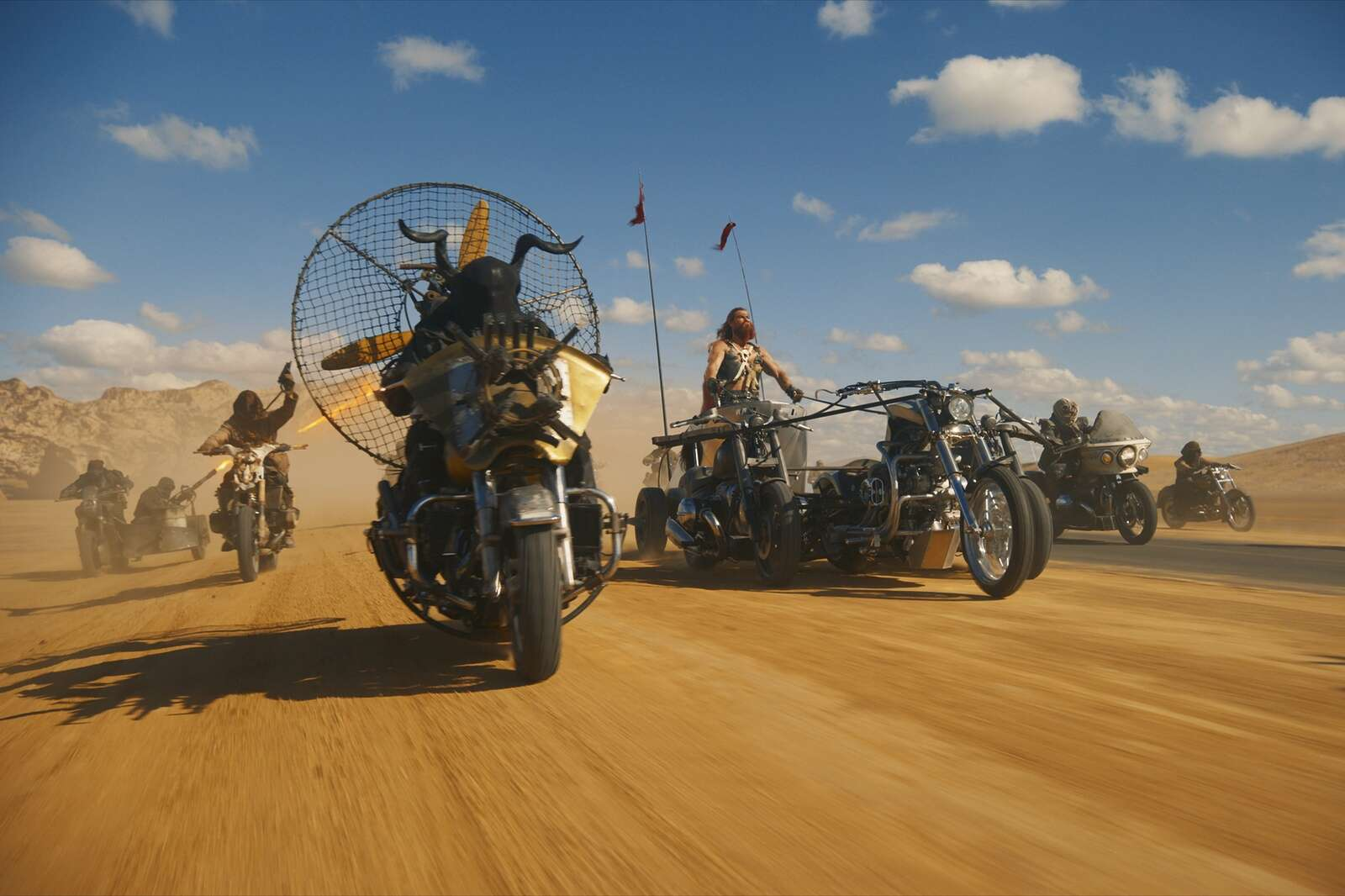
Enter Dementus (Chris Hemsworth), schnozz first and screaming like a seagull in almost every line. Dementus leads the Biker Horde atop a chariot led by motorcycles. He is big, charismatic, and impressive. He’s also a pathetic sap who is so destroyed by the death of his family that he begins to refer to himself as already dead, broken by the wasteland and savage as that one retail manager you knew from that old job. Rather than braving the cruelties of this new world he has chosen to enact them, relying solely on hatred to fuel his cause. After Trojan Horsing his way into control of Gastown, Dementus secures his place among the warlords but just…sucks at it.
Oh, and he also kidnapped Furiosa and crucified her mother over a firepit. So there’s that.
This epic tale of revenge pits the young kidnapee against her captor over years. Time will take her from slave to wife of Immortan Joe to mute warboy to Praetorian as she moves up through the ranks, biding her time until she can escape and go home. Anya Taylor-Joy works selflessly throughout the film, aging from the angry child into a woman that truly does feel (and look like) a slightly younger version of Charlize Theron’s character. The transitions are believable and her action work is incredible. She was born with those massive eyes and she makes a special effect out of them, truly breathtaking stuff.

Doesn’t hurt that she spends roughly a third of the film with Praetorian Jack (Tom Burke), a character that first fulfills the idea of hope that will lead to Mad Max: Fury Road. The handsome Aussie has wonderfully chemistry with our lead actress, forming a bond that feels like more than friendship but the characters don’t have time for figuring that out right now. The two meet during the film’s most incredible action sequence. The War Rig is new, headed to Gastown, and the fight that Furiosa and Praetorian Jack engage in with flying attackers dogging them is just amazing. Burke gets quite a bit to do but it’s Taylor-Joy, a stowaway on the rig, that receives the lion’s share of benefit. It’s a shame all action sequences can’t achieve this level of storytelling and world-building without an info dump because I was in awe throughout.
More praise needs to be heaped upon Nico Lathouris, who assisted Miller with the casting and character work on the last Mad Max installment. Lathouris returns with a co-writing credit, having helped develop every character’s backstory so thoroughly that the pair thought Furiosa deserved her own movie. Cinematographer Simon Dugan, producer Doug Mitchell, stunt coordinator Guy Norris, all heighten everything they did last time to biblical proportions but it’s returning composer Tom Holkenberg that really shines. Holkenberg, also known by his DJ name Junkie XL, has worked with George Miller on all three of his latest films but here he’s delivered something special. Much of his music from Mad Max: Fury Road makes a return but it’s his new themes, particularly his theme for Dementus, that grab Furiosa and yank it up from epic to the gates of Valhalla itself.
Those going in expecting what they got before are 1) possibly going to be disappointed and 2) don’t know much about George Miller. This desert epic is just on the right side of unwieldy, instead knowing when to pivot and exactly what the film needs to end on – hope. How do we brave the new world’s cruelties? With hope for more, for better, for freedom. Even in the face of Armageddon, Miller manages to scrape the remains of humanity off of the floor and give them purpose. Furiosa is a beautiful, raging, complicated epic that deserves to be seen on the loudest screen possible. Miller has taken a giant leap here, crying “Witness me!” as he flies, and the result is, indeed, epic.
Furiosa: A Mad Max Saga is currently in theatres.

 WRITE DRUNK; EDIT DRUNK