

One often wonders where so much of our horror lore comes from. When digging in, I often turn to Kier-La Jannisse’s documentary Woodlands Dark and Days Bewitched: A History of Folk Horror. It was a help in discovering the depths of folk horror for so many fans, channeling the history of the genre into something tangible and real. It’s a book to discover, played out onscreen, that leads those with a proclivity for research to discover even further examples of literature and poetry that add to the genre.
Adrien Beau’s The Vourdalak, releasing June 28th exclusively in US theatres from Oscilloscope Laboratories, is a striking and weird example of folk horror. It’s roots sink deep, all the way back to a French novel from 1839. The Family of the Vourdalak, written by Aleksey Tolstoy, is an eerie piece of fiction involving a French diplomat encountering a legend brought to life in a Serbian village. Beau’s film takes this premise and elevates it, creating wonderful relationships between its prissy main character and the family living in a small Serbian estate.

And what a marvelous priss Marquis Jacques Antoine Saturnin d’Urfe (Kacey Mottet Klein) can be. From his wig to his powdered face and beauty spot, the nobleman feels entitled and out of place amongst the family of Serbians. The village has recently been pillaged by the Turks and family patriarch Gorcha (Director Adrien Beau providing the voice) has gone after them. The Frenchman find the family bizarre enough but when Gorcha returns the awkward lodging descends into a horror beyond imagination.
I’m serious about that last part. I could not have imagined just how strange and gross The Vourdalak could be without ever displaying an upsetting amount of gore. The entire sound design team deserves recognition for their work on the squelching. Large, disorienting, wet chewing noises pervade the film and are an important part of the ever-growing dread that encompasses the Gorcha estate. Every piece of audio is heightened to maximize the otherworldly, lost life sensation the film sets up. It pairs well with its soft visuals and lighting, keeping d’Urfe as a stranger in a strange land that will never fully grasp what horrors he faces.
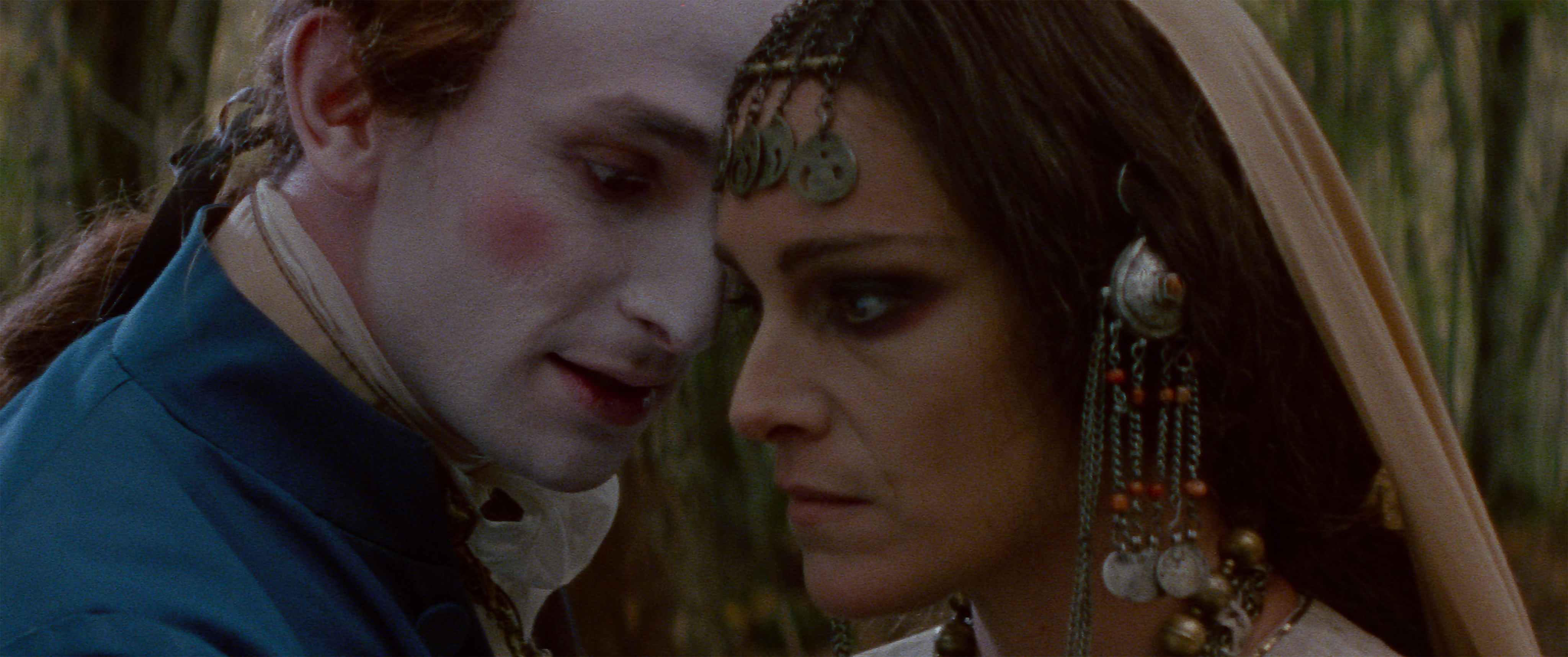
Beau’s characters strike a startling contrast to others in the horror genre. We often see bluntness in our horror icons, but Beau’s screenplay (co-written with Hadrien Bouvier) decides to avoid truly villainizing anyone outside of the Vourdalak itself. d’Urfe is a complicated character, entitled and spoiled enough to take the rejection of Sdenka (The Lobster’s Ariane Labed) as just insufferable teasing while being bold enough to defend a child in the dark from a monster, even if he can’t look at the thing. Labed is an absolute standout, displaying a complicated portrait of womanhood in a time when its only value was chastity and the ability to breed. Sdenka, Gorcha’s daughter, is woman trapped in her own unwilling resolve. What Labed does with the part is truly outstanding, from the way she holds her face to her ability to use each tiny piece of costuming and make it something special.
The cast is rounded out by Jegor (Grégoire Colin), Gorcha’s eldest son and patriarch-in-waiting, his wife Anja (Claire Duburcq) and son Vlad (Gabriel Pavie), and Jegor’s sibling Piotr (Vassili Schneider). Jegor drinks a lot and worships his father, Anja worries about literally everything, and Piotr is struggling with their own gender identity in the face of tradition. Vlad? He’s just having a great time, whether its laughing at Gorcha’s gruesome behavior or awkwardly looking to his father.
Let’s talk about Gorcha. The character returns from hunting the Turk bandits, whom Jegor had failed to find. He’s a puppet, and one of the best I’ve seen in ages. Adrien Beau provides the voice of this thing but the look of it is something special. He’s spindly, with a sunken face and pasty white skin. There’s a level of humor to The Vourdalak that i hope does not go unrecognized and Gorcha is a huge part of it. The fact that the entire family sees something wrong and that Jegor ignores it leads to situations both hilarious and horrifying. The prop work and design of the film are exquisite, lending the film an out-of-time identity that allows it to feel timeless.

Genre fans are going to go nuts for this but I think those bracing from blood and viscera are missing the point. The Vourdalak is an exploratory work that does not lend easy answers to the questions it poses, instead opting to instill true dread and fear into its delightfully weird execution.
The Vourdalak opens exclusively in US theatres on June 28th.

 WRITE DRUNK; EDIT DRUNK