

Doing something completely new often turns out awkward. Francis Ford Coppola’s decades-in-the-making project is one of those new things. Beneath its bemusing imagery, it’s on-the-nose political ideas, and true mish-mash of performances lies something so utterly sincere that I can’t love or hate it. Rarely do I get something that I must fully interact with (and that part is taken literally at a point), but Megalopolis begs audience participation to the point where a scene in the movie will be a coveted moment in all future cult screenings to come. And yes, those cult screenings will come. You’ll have people cosplay as Wow Platinum (Aubrey Plaza), gender-bending fail son Clodio Pulcher (Shia LeBeouf), and even wealthy bank magnate Hamilton Crassus III (Jon Voight) as they wander the pre-screening crowd, toilet paper tube stuffed in their pants, asking everyone, “What do you think of this boner I got?”
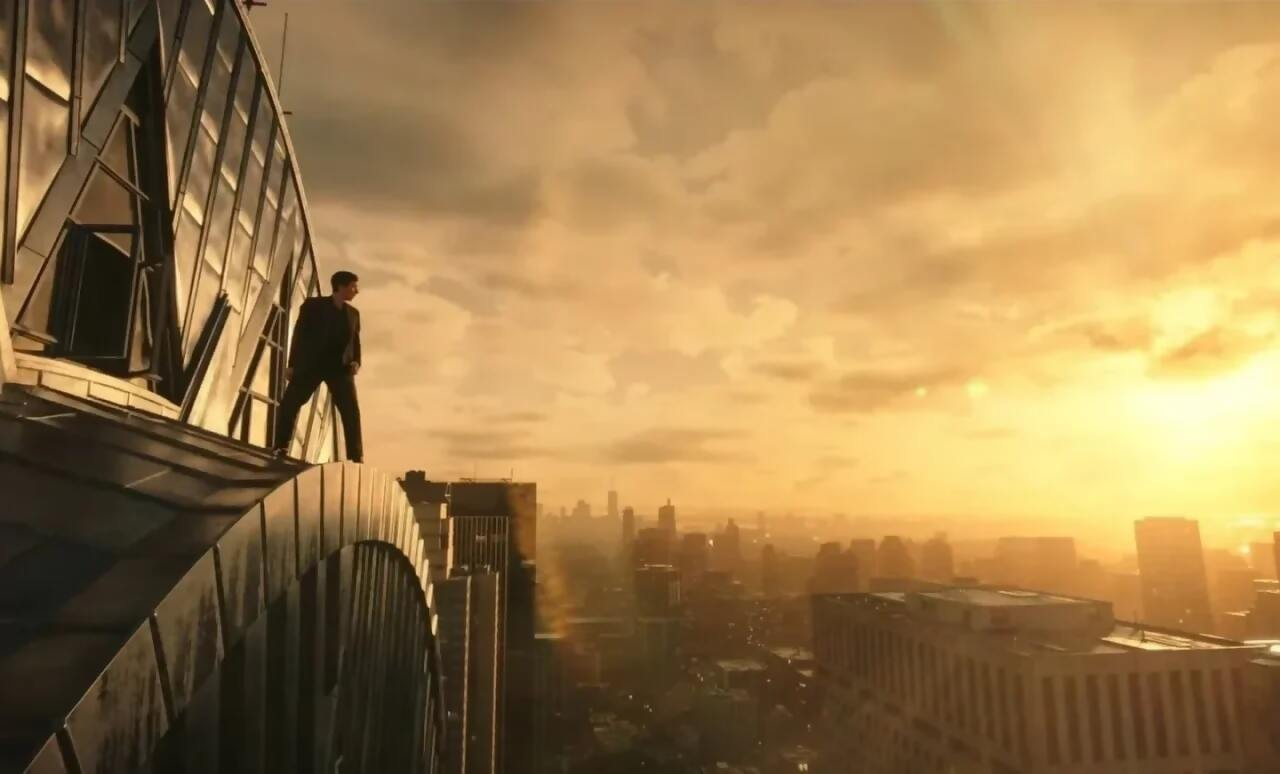
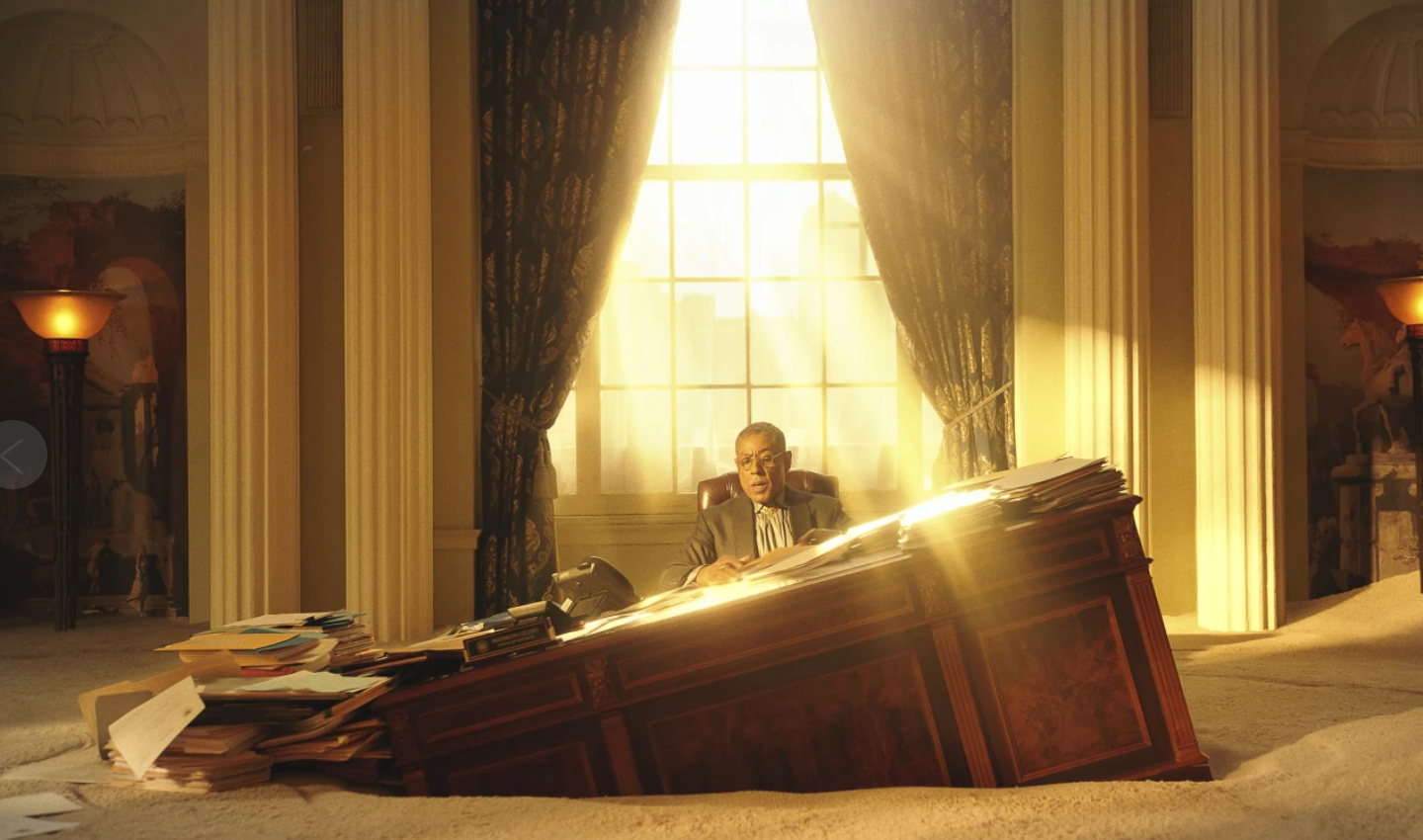
Coppola’s miraculous travesty is built around the idea that America has become the new Rome, destined to crumble as its political and economic figureheads become too wound up in their own power and lavish to stop it. Cesar Catalina (Adam Driver) sincerely wants to create something lasting, often to the point of being an asshole. His pitch? Megalopolis, a city made of his new metal Magalon. Is it made out of the spirit of his deceased wife? “Maybe,” says Mayor Frank Cicero (Giancarlo Esposito), who stands in opposition to keep New York Cit…erm, sorry, New Rome City on track. The mayor and his cronies (including a delightfully unhinged Dustin Hoffman) are labelled slumlords and have a hard time holding the city together. Catalina truly wants to create a city that will grow around its population, providing free and efficient transportation and resources in a utopia that sounds unbelievable.
Coppola’s allegory to the artist is thinly veiled but he makes some effort to keep his one-to-one with Driver’s Catalina sane. Catalina is an egotist; highly intelligent but struggling to connect with real, day-to-day people. He is, however, able to connect with Cicero’s daughter, Julia (Nathalie Emmanuel). Coppola has dedicated the film to his recently deceased wife, Eleanor, and seems to have scattered her across multiple characters. The most realized of them is Julia, a decadent partier turned muse for Catalina. Everyone is sort of related in that Roman royalty way, leading to speculation of incest and intrigue in the palace, but the romance between Driver and Emmanuel’s characters is a sound, heartfelt center to hold this house of cards together.
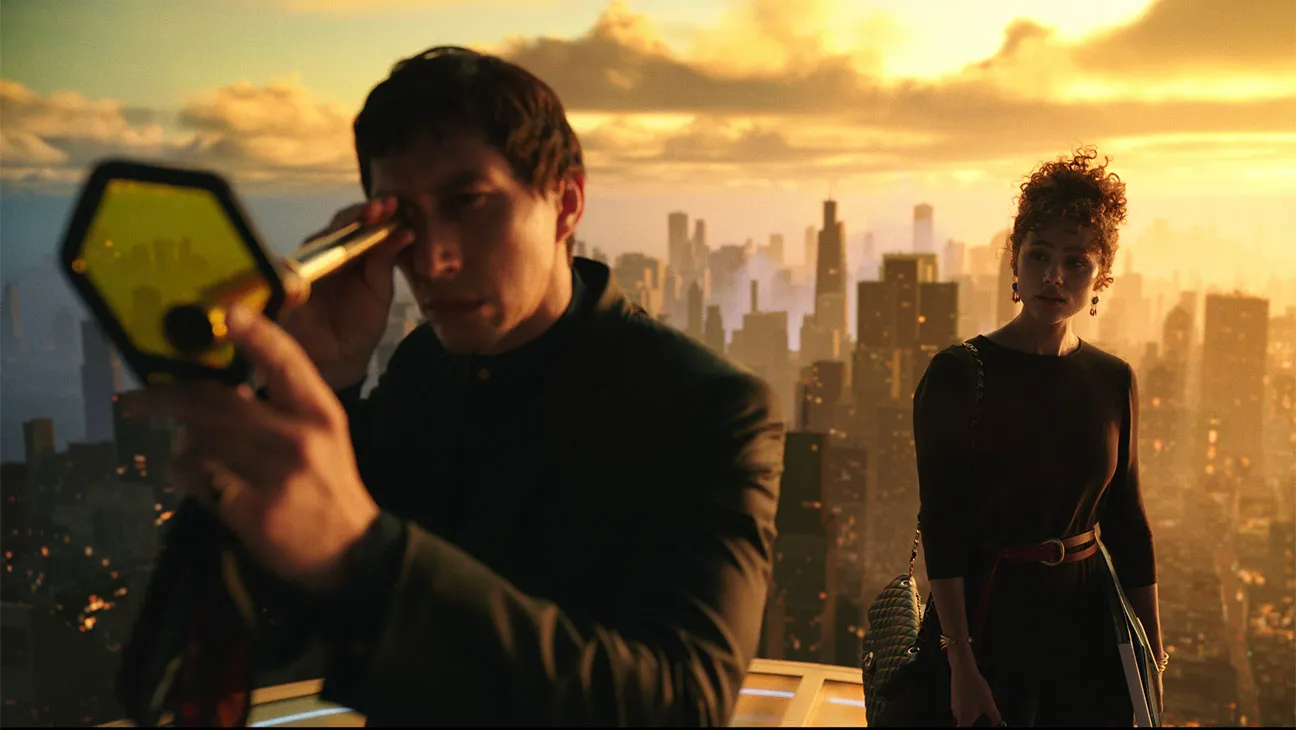
Good thing Coppola has that as well because the look of this movie is insane. Large, practical sets are mixed with everything from lovely graphic images to dodgy CGI. Emmanuel hops from girder to girder, high above the city, to speak with Driver but the whole thing is clearly cardboard sets with a background edited in and it’s honestly…kind of charming? The boots-on-the-ground approach to so much of this is delightful. Drug trips with kaleidoscope effects bleed into scenes of real horses dragging real chariots around an arena while masked wrestlers slam each other around Madison Square Garden. It’s a fun hodgepodge of contradictory images that manage to feel right even if they look sort of wrong. Even Osvaldo Golijov’s score leaps between horny saxaphone/flute noir and grand, sweeping sound inspired by Miklós Rózsa’s score for Ben-Hur.
Much of the dialogue revolves around time, manipulation of it, and it’s expression in art. Painting is time frozen, architecture a symphony frozen, and Driver’s character can shout “Time, STOP,” to manipulate the world around him. This ability and its usage is nothing that needs explaining, more of something to just go with. You’ll be happier for the experience, particularly in an era where so many audiences walk into every film looking to feel superior to it after binging days of “CinemaSins” on YouTube. Megalopolis will be remembered as one of the purest expressions of film as an art form, warts and all. There has been a lot of talk about the death of film, of movie theatres. “When does an empire die,” asks Fundi Romaine (Laurence Fishburne). “When people no longer believe in it.” Coppola is asking you to believe in film again, even if he’s got to drag audiences kicking and screaming into the future to secure their faith.
It’s hard to avoid chuckles during a viewing of Megalopolis. There is as much of it that is ridiculous as there is triumphant. Long, extended sequences of actors quoting poetry and huge establishing shots (mostly shot in 2001) with Laurence Fishburne narrating dramatically clash with some of the camp brought by performers like Voight and Plaza. Driver and Emmanuel’s utter sincerity rings so true but so does some of the sillier performances. Wow Platinum is so familiar that she could be one of your favorite YouTube channels that bothers people on the red carpet, while Clodio’s fascist ramblings and “Make Rome Great Again” merchandise are silly but only a step away from your worst, Facebook-addicted relatives.
Megalopolis is self-financed by Coppola, something I think makes box office reporting on it beyond hilarious. The point of this isn’t to make a ton of money, it’s to have it exist at all and I’m so glad it does. In a world where every major movie follows roughly the same plot, cracks the same jokes, and look like they were all shot in a Best Buy parking lot this is a breath of fresh air. This is only a few years away from achieving cult status, complete with audience participation. This isn’t like when we go see Birdemic or The Room. This is more of an earnest, psychotic swan song from a director that’s lived more of his life than not a titan of Western cinema. This is every idea all at once, not too far separated from David Lynch’s Inland Empire. Is it bad? Wrong question. Is it good? Still the wrong question. Catalina’s stance? “When we ask these questions, when there’s a dialogue about them. That is utopia.” Sure, it’s not as funny as Voight’s boner line, but it’s every bit as important and every bit as special.
Megalopolis is currently in theatres and that is how it SHOULD be watched.

 WRITE DRUNK; EDIT DRUNK