
Some stories are so ingrained in your bones that you can’t ever truly separate from them. I’ve got a few of them, much like any film geek, but Planet of the Apes is such a part of me. My family showed me the films as a young child, never quite managing to mention that are about systemic racism and the religious fear supporting it (they’re quite conservative, afraid of these concepts), and I always wanted more. Tim Burton took a swing at the franchise that didn’t work (Paul Giamatti innocent), but Rupert Wyatt and Matt Reeves’s reboot trilogy took on the Moses story with gusto. That trilogy serves as some of my favorite 2010s blockbusters, engaging and thoughtful while never settling for less than greatness. When a sequel was announced I got nervous, unsure how the story would work in the hands of anyone but Reeves and Serkis.
I’m quite pleased with what we’ve been gifted, even if I have some very big questions about this world. Won’t go into those spoilers here, you’ll just have to see the film and find out for yourself.

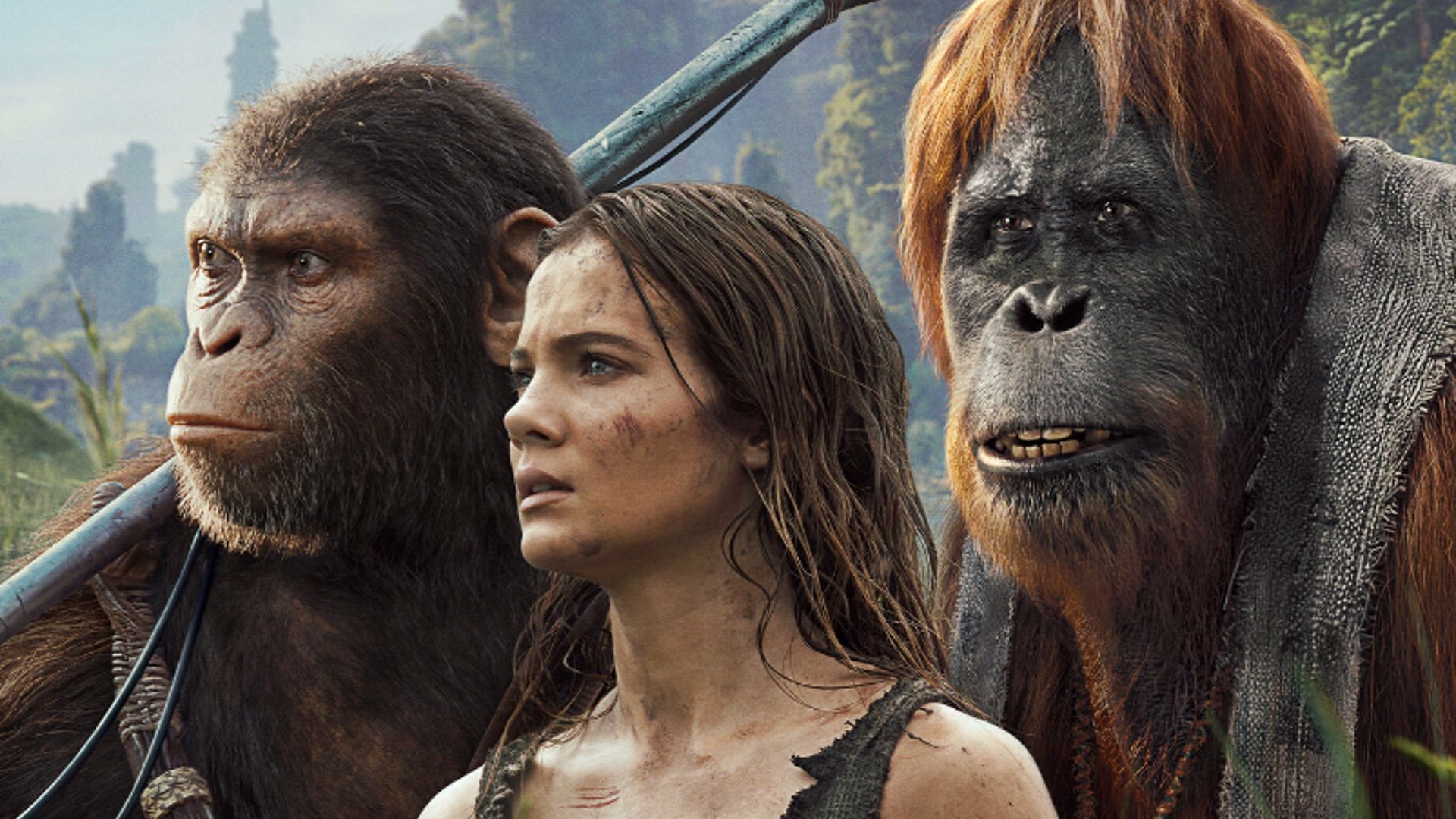
It’s smart to set Kingdom of the Planet of the Apes several generations after Ceasar. One of the most fun things about the original film is seeing an Ape civilization and we finally get that. They’ve created different clans and cultures, work with different religions, and are separated enough from Ceasar to be beyond questioning his legacy and instead canonizing him. Noa (Owen Teague) comes from the Eagle Clan and hasn’t even heard of ape-Jesus. His people live in large towers of wood and metal, all built around their aviaries. He’s a youngster, seemingly late teens and about to become an adult, and he needs to bond with an eagle. That’s it, that’s their life. They use the birds to fish, to hunt, and they grow vegetation for the rest of their food diet. It’s peaceful, respectful of nature, and quite lovely.
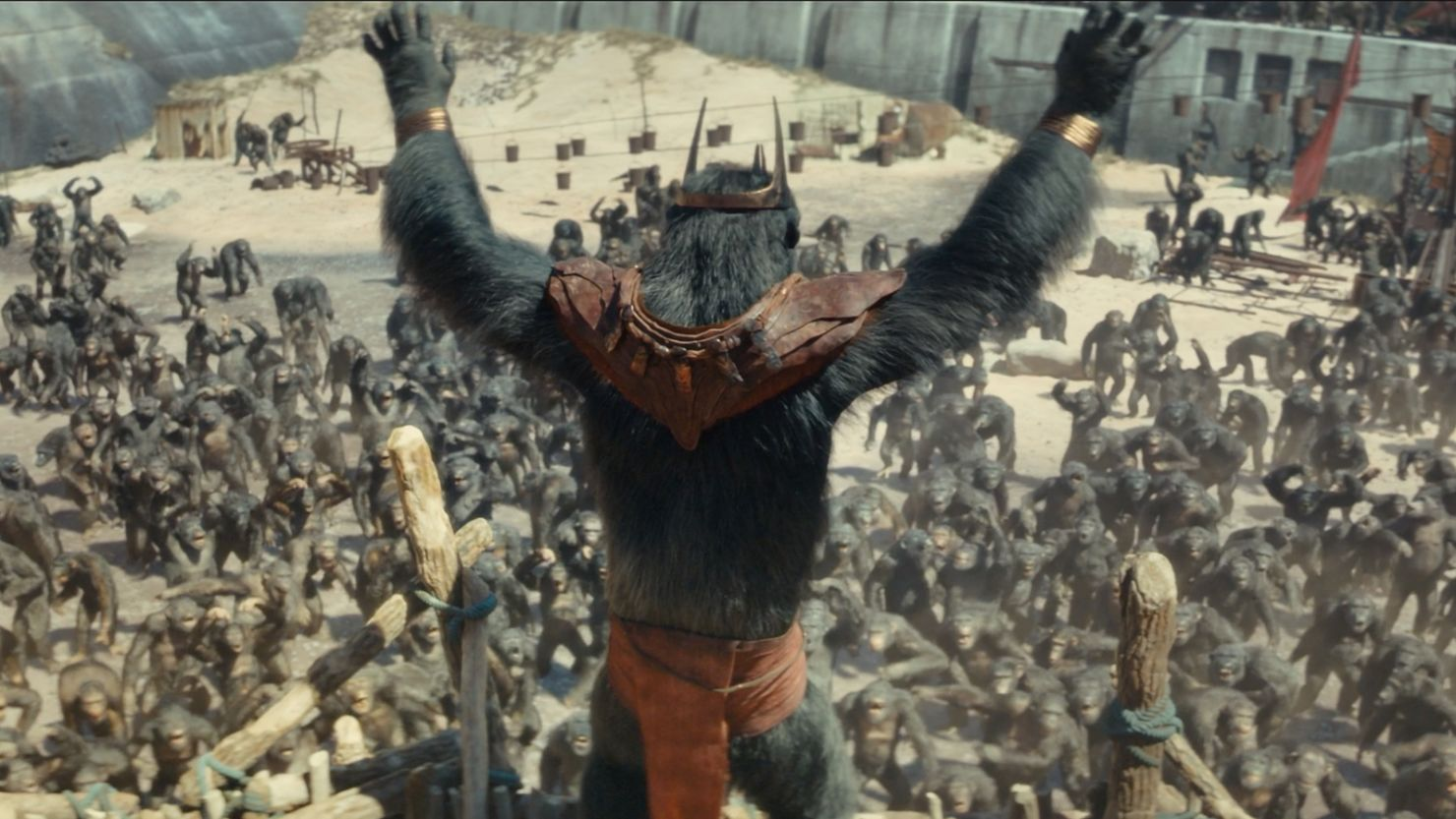
So of course militaristic apes led by a religious figurehead come and mess everything up. Proximus Caesar (Kevin Durand, giving 110%) is capturing clans, bringing them to his coastal civilization in an attempt to bring apes together in a new kingdom. The idea is pretty solid, but his methods leave several dead or abandoned. Joined by the orangutan Raka (Peter Macon), a Caesar scholar, he heads out to rescue his clan and bring his people home.
Simple enough premise, but what follows is one of the more thoughtful and interesting tentpoles Disney has released. None of it is less than blunt, with a fascist dictator attempting to raise a violent military with tons of artillery under the guise of nationalism. It’s the interactions between the cast that make this wonderful. Durand is definitely the standout, but Eileen actor Teague is no slouch. Serkis is a hard act to follow, which everyone seems aware of and works to overcome. WETA FX does some incredible work here, taking the performances and transforming them from something great into something special. Teague takes the top spot for being able to manipulate these effects properly, delivering a moody and interesting performance, but I gotta give the gold star to Durand. The Abigal actor is delivering a performance that feels like a person whose initial good intentions have gone by the wayside and they’re incapable of realizing it.
I was also highly impressed with Freya Allan, an actress I was unfamiliar with. She tags in as the human character, named Nova by the apes because “That’s what Caesar called them.” There’s a ferocity and conviction to the performance that turns out to be wonderful when inner conflict enters. She’s great, and I hope Wes Ball bucks trend for these films and brings her back for the next one.
The film is further elevated by a score that’s surprisingly wonderful due, perhaps to how unoriginal it is. John Paesano, who is a Wes Ball regular, has brought a lot of Jerry Goldsmith’s music to couple with sound design ripped directly from the 1968 film. Nostalgia can be a powerful tool and a pain in the ass but Ball’s team delivered. The film is laden with references, from a Fort Wayne remark to the imagery of feral humans in nets, but it’s these sounds and music cues that make the film feel like a true Apes movie. Nostalgia without derailment or pandering is hard to do, something I think only The Matrix Resurrections has properly pulled off in recent years. It’s quite nice here and Paesano’s work is a great example of an artist elevating the project at the sacrifice of originality.

Apes has always been a deeply political franchise and this new entry does not deviate. A charismatic, illiterate leader utilizing religious and moral panic to motivate followers feels ripped straight out of the headlines and it’s part of what drives this movie from good to great. We’ve moved from racial inequality into something more modern, with systemic xenophobia and moral panic being used to justify a planned genocide of another race out of fear. That feat travels both ways but we are only shown one side of it, another problem faced by modern Western audiences. These deeply ingrained issues are being brought to audiences in a world with parents fighting to keep them from schools, burning books about them, and outright lying to each other over these issues. The film is entertaining enough to feel far from a lecture but there’s no pretense here. I’ll be curious to see how this sits after a couple of weeks and am already cringing at the idea of people taking issue with the reality Ball is portraying onscreen.
This movie rules. It’s got everything I want from an Apes movie and I also got surprise William H. Macy. Movies can be more than candy and our blockbusters should strive to be this intelligent, lovely, and engaging. Give me six more of these, hook it to my veins, because this is what I’ve been missing in cinema.
Kingdom of the Planet of the Apes is currently playing in theatres.

 WRITE DRUNK; EDIT DRUNK